Monday, 15 August 2022

Mondig Zuid (René van Zundert, 2022)


The most recent edition of the International Film Festival Rotterdam saw its RTM strand showcase a dozen works from local filmmakers, and word has it that the 2023 festival will place an even greater emphasis on films made in the city on the Maas.  What is interesting about the RTM strand is that it almost acts as a festival inside a festival: there are a mix of shorts, features, series and documentaries, and the makers of the selections range from those just starting out to those who have long since been established in the world of cinema.  Highlights of the 2022 RTM selection included Christiaan van Scheermbeek's Altijd alles anders, which detailed Paul Röttger's work with the Rotterdams Centrum voor Theater, and So Loud the Sky Can Hear Us, a raucous and ridiculously entertaining short focusing on some particularly fanatical Feyenoord supporters.


Also among the offerings in this year's RTM was René van Zundert's hour-long documentary Mondig Zuid which, as its name suggests, fixes its gaze on the south side of the city.  Within this geographical area, van Zundert's focus is on three young people—Tamia, Selena and Darlin—all of whom are dealing with that well-known issue of growing up; as most adults will confirm, this experience can bring more than its fair share of complications.  The bright, articulate Tamia finds herself well and truly up against it as she strives to become a spoken word artist; Selena is from Bloemhof—which in 2009 was placed fourth in then-Dutch Minister of Housing Eberhard van der Laan's list of "40 problem neighbourhoods"—and writes daily letters to her sister, who has been been placed in a youth institution on account of her behaviour; and Darlin, who is originally from Curaçao, aims to finish school, find a job, and stay out of trouble.
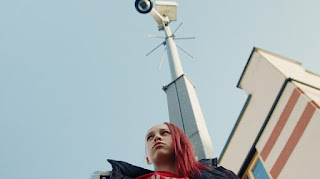

While all three of the film's subjects face various challenges, there's a lot of hope on offer in Mondig Zuid—which carries the alternative title Talk is Cheap—as we watch these children attempt to figure out solutions to their problems.  The film is an unsentimental, pragmatic affair, one from which we get a fine sense of how daily life is for Darlin, Selena and Tamia, and while its fly-on-the-wall format may be very familiar, it's the most effective way to capture the moments of isolation and confusion that are common to, well, virtually everyone who's ever gone through the ritual of growing up.  Which is not to say that Mondig Zuid is all about the solipsistic mindset: Darlin, mindful of his own experiences when he first arrived in the Netherlands, happily helps out at Dutch language classes aimed at those who have immigrated to the country; similarly, Selena seems keenly aware of the situation in which her sister finds herself, and her long-distance efforts to support her absent sibling come across as heartfelt and genuine.  


While it's inherently televisual, Mondig Zuid's true achievement lies in its editing; presumably, countless hours of footage had to be distilled down into the crisp, easily digestible finished product, which feels just about right in terms of duration.  To present normal people carrying out everyday tasks isn't difficult, but making such a spectacle engaging requires considerable skill, and van Zundert has crafted a film that is always compelling.  Of course, it helps that the trio of Selena, Darlin and Tamia are likeable and relatable, and most viewers will be willing them to overcome the various obstacles that are placed in their paths.  While it may be the case that Mondig Zuid will hold most appeal for those familiar with Rotterdam, there's a universality to the film: the world is full of similar young people, all employing various strategies as they attempt to navigate the many forks in the road. 

Darren Arnold

Images: IFFR

Tuesday, 12 July 2022

Holgut (Liesbeth De Ceulaer, 2021)

Belgian filmmaker Liesbeth De Ceulaer's Holgut is a film many years in the making, and it proves to be a tough one to classify: both the London Film Festival and the IMDb have it down as a documentary, but De Ceulaer has infused her film with enough dramatic elements to make this status questionable.  That said, in Holgut it's often hard to identify what has been staged for the camera and what is straight documentary—although you might want to spend some time doing so, as the film offers precious little else to engage with.  While there's a kernel of a good idea here, Holgut shows little to no interest in developing it, and the end result is an infuriatingly opaque experience.

In a frozen wilderness, brothers Roman and Kyym spend their days hunting a rare, near-mythical reindeer; parallel to this expedition is the story of scientist Semyon, who is searching the same icy landscape for mammoth remains, which he hopes can be used for cloning purposes.  Once these three have scoured vast swathes of this unforgiving region, which once formed part of the mammoth steppe, it seems that the only way is down, and a journey beneath the permafrost takes the story quite literally in a different direction.  As you might expect, a point does arrive when the two quests become linked in a way that goes beyond their shared setting, and these seemingly disparate storylines come together in a manner which is nothing if not surprising.      

While watching Holgut, it doesn't take long to latch onto the contrasting nature of the quests: while Roman and Kyym are hunting what is, at best, a highly-endangered animal, Semyon is aiming to bring a species back from the depths of extinction.  There's a lot riding on both of these expeditions, so why does the film give off a sense that there's so very little at stake?  Even at a scant 75 minutes, Holgut feels stretched to breaking point, and at no stage is there a sense of urgency—which is kind of remarkable, given the subject matter.  While the film has one or two interesting points to make regarding both extinction and climate change, these are delivered in such an oblique manner that it seems highly unlikely that anyone will consider Holgut to be a remotely useful work on these subjects—especially when there are other films available that cover these topics in a much more accessible way.

Holgut comes off especially badly when compared with Genesis 2.0, a 2018 documentary that covered similar ground, also via dual storylines: one concerning the science that may bring about the return of woolly mammoths, the other focusing on those hunting for the same creatures' tusks.  Genesis 2.0 is an absorbing, thought-provoking piece of cinema—in short, it's everything that Holgut isn't—and those seeking a mammoth fix would do well to seek it out, or even opt for a random instalment of the Ice Age franchise.  With pacing that might be best described as—ahem—glacial, Holgut is, unfortunately, something of an ordeal, one which feels like double its actual running time.  We can hope for better things to come from Liesbeth De Ceulaer, but Holgut delivers neither the insight nor the experience it promises. 

Darren Arnold

Images: Flanders Image

Monday, 4 July 2022

All-In (Volkan Üce, 2021)

At the start of the summer season, Ismail and Hakan start working in Nashira Resort, a gigantic all-inclusive hotel at the Turkish Riviera. Ismail is 18 and dropped out of school to earn money for his family. He dreams of working as a hairdresser, but is employed as a kitchen porter at the hotel. Hakan is 25 and the youngest of 12 children. He quit his studies and hopes to overcome his social anxiety in the hotel; he will work as a lifeguard at the aquapark. Both have come to the hotel business to move ahead in life and to learn English. At first both young men are very shy and avoid all contact with the hotel guests. They have learned to be respectful to others and they understand their position. They observe the colourful swimsuits, the unemptied plates, the different ways of addressing other people, and gradually discover the sorts of opportunities that come with them. 


As the friendship between Ismail and Hakan grows stronger, it becomes clear how different they are. Watching the guests from behind his buffet, Ismail’s appetite to discover the Western world only seems to increase. But Hakan struggles to be ‘the nobody’ the hotel business demands him to be. In vain, he tries to discuss Pushkin and Dostoyevsky with the Russian tourists. Is it at all possible to set your identity aside for the sake of money? And who can be an example to whom? By following Ismail and Hakan during two summers in the hotel, All-In explores the loss of innocence against the backdrop of a fading European dream. Initial kindness turns into indifference as Ismail and Hakan’s initiation into the absurd world of Western tourism soon leads them to ask: which dreams are really worth aspiring to?

Source/images: Flanders Image