Showing posts with label Bertrand Bonello. Show all posts

Monday, 3 February 2025

Maldoror (Fabrice du Welz, 2024)

An image from the film Maldoror. A bride and groom are smiling as they cut their wedding cake.

Despite his Belgian nationality, Fabrice du Welz has often been linked with the New French Extremity, as has that fine performer Laurent Lucas, whose extensive work in the movement includes Leos Carax's Pola X, Julia Ducournau's Raw, Marina de Van's In My Skin, and a trio of films for Bertrand Bonello.  Maldoror sees du Welz once again reunite with Lucas, who previously starred in the director's films Calvaire, Adoration and Alleluia.  As with du Welz's feature debut Calvaire, Maldoror pits Lucas against a quite diabolical character played by Jackie Berroyer, an actor who has never been more sinister than in his work for du Welz, which also includes a turn in Inexorable (pictured below), whose female leads Alba Gaïa Bellugi—sister of Galatéa— and Mélanie Doutey both have roles in Maldoror.


While Du Welz's longstanding fascination with the macabre is present in the riveting Maldoror, what is conspicuous by its absence is the streak of jet-black humour normally associated with his work; given that the film focuses on the case of Marc Dutroux, Belgium's most notorious child killer, this seems wholly appropriate.  Many consider the string of abduction murders carried out by Dutroux to be the worst crimes in Belgian history—indeed, the impact of the case was so profound that one-third of Belgians with the surname Dutroux sought to change their last name.  Prior to the Dutroux affair, the Charleroi suburb of Marcinelle was best known for a 1950s mining accident that killed 262 people; that this disaster has now been eclipsed says much about these brutal murders' terrible legacy.


As such, du Welz needed to take a most cautious approach when preparing his film, which features some fabricated elements in order to provide a sense of justice that many Belgians felt was lacking from the real-life case (the director has cited Tarantino's Once Upon a Time... in Hollywood as a key influence in this regard).  The names of the characters have been fictionalised, with Sergi López's skin-crawling Marcel Dedieu serving as a proxy for Dutroux as Anthony Bajon's young police officer Paul Chartier becomes obsessed with linking the suspect to the disappearance of two young girls.  The impulsive Chartier is largely hamstrung by both his jobsworth boss Hinkel (Lucas) and a system in which, à la David Fincher's Zodiac, three separate police services are rarely on the same page.


Maldoror is a police procedural that has much else in common with Fincher's touchstone of the subgenre: each film runs to over two and a half hours and features a protagonist whose monomaniacal devotion to cracking a serial killer case results in the loss of their job and family.  In choosing to focus on the investigation as opposed to the crimes, du Welz handles the material in a subtle, tactful manner—yet Maldoror remains a queasy spectacle, one that will prove too strong for some.  It is now almost 30 years since Dutroux was apprehended—he was caught in 1996, the same year the death penalty was abolished in Belgium—but this dreadful episode remains a highly sensitive matter for many of Fabrice du Welz's compatriots, as does the topic of his next film: the rubber trade in the Belgian Congo.

Darren Arnold

Images: BFI

Monday, 3 June 2024

Four Daughters (Kaouther Ben Hania, 2023)

An image from the film Four Daughters. Two young women sit side by side on a sofa.

Earlier this year, acclaimed filmmaker Kaouther Ben Hania's Four Daughters (Arabic: Banāt Olfa; French: Les Filles d'Olfa) fell slightly short in its bid to win the Oscar for best documentary feature.  Ben Hania is no stranger to the Academy Awards, as her 2020 narrative film The Man Who Sold His Skin was nominated for best international feature; centring on a Syrian man who went to desperate lengths to reach Brussels, the film was based on a bizarre true story and starred Monica Bellucci and Belgian actor Koen de Bouw.  The Man Who Sold His Skin would eventually lose the Oscar race to Thomas Vinterberg's excellent Druk (AKA Another Round), and Four Daughters also faced some stiff competition in March when it came up against Maite Alberdi's The Eternal Memory, Christopher Sharp and Moses Bwayo's Bobi Wine: The People's President, Nisha Pahuja's To Kill a Tiger, and eventual winner 20 Days in Mariupol.


Four Daughters'  Dutch premiere took place in January, when it played in International Film Festival Rotterdam's Limelight strand, which also included such titles as Bertrand Bonello's The Beast, Sean Durkin's The Iron Claw and James Nunn's One More Shot.  This year, the Limelight section opened up its scope beyond Rotterdam, with audiences in Arnhem, Groningen, Maastricht and Den Bosch getting the chance to catch an advance screening of a film from the strand's eclectic selection.  Ben Hania's film focuses on a Tunisian family headed by single mum Olfa Hamrouni, who, as per the title, has four daughters.  In the wake of the First Arab Spring (which began in Tunisia, the only democracy to emerge from the uprisings), Olfa's two eldest girls—Rahma and Ghofrane—were radicalised and left home for a jihadist training camp in Syria.  Understandably, this left a huge hole in the lives of Olfa and her other two daughters, Eya and Tayssir.


In Four Daughters, actresses Nour Karoui and Ichraq Matar respectively take the roles of Rahma and Ghofrane, while Eya and Tayssir play themselves as events from the four girls' past are restaged for the camera.  While this is all quite straightforward—in essence, the sisters are joined by proxies for their absent siblings—matters get much cloudier when it comes to the mother's part in the film: even though Olfa is still very much present in the family home, she too is played by an actress (Hend Sabry), but the real Olfa is always ready to interrupt a scene when she feels it isn't playing out as she remembers.  It's suggested early on that Sabry's function is to act in those episodes which are too painful for Olfa to relive, although Eya and Tayssir are afforded no such safety net.  Given its slippery mix of fact and fiction, some may have been slightly surprised to see Four Daughters nominated for the best doc Oscar—it is certainly more of a docudrama than a strict documentary—but on balance it is fair to say that the film always has reality at its core.


As formally interesting as it is sincere, Four Daughters is sadly lacking when it comes to providing genuine insight into why these two girls decided to join Daesh; in this regard, Benedetta Argentieri's The Matchmaker—which documented the story of student Tooba Gondal, who left London to link up with ISIS in Syria—offered a more compelling look at the radicalisation of young women.  With her novel setup established, Kaouther Ben Hania appears wary of doing anything that could upset the metafictional apple cart, and the upshot is that the form eclipses the content.  But the quasi-family dynamic presented here is both moving and undeniably impressive, and there is much to like about the ways in which the performers interact with Olfa and her two remaining daughters.  Surprisingly, given its grim subject matter, Four Daughters is not without humour, and several of the reënactments elicit genuine laughter from all involved.  Yet no amount of hilarity can obscure the keen sadness at the heart of this fitfully engaging film.

Darren Arnold

Images: Jour2Fête

Friday, 6 October 2023

LFF 2023: Red Rooms


Canadian filmmaker Pascal Plante made quite a splash on the festival circuit with his two previous narrative features, Fake Tattoos and Nadia, Butterfly, which competed at Berlin and Cannes, respectively.  In keeping with this trend, Plante's latest film, the compelling, unsettling Red Rooms (French: Les chambres rouges) has been selected for the BFI London Film Festival, where it screens out of competition as part of the Cult strand on Sunday, October 8 and Monday, October 9.  Red Rooms' appearance at the LFF comes just a few months on from its world premiere at the Karlovy Vary International Film Festival, where it vied for the festival's Crystal Globe; while it ultimately fell short in its bid to secure the KVIFF's main award (which went to Blaga's Lessons), the film's presence at both Karlovy Vary and London cements its director's position as a European festival mainstay.


The LFF's Cult section, while always worth a perusal, is particularly strong this year, with Red Rooms taking its place alongside the likes of Bertrand Bonello's keenly anticipated The Beast, Frankenstein riff Birth/Rebirth, and belated sequel Nightwatch: Demons Are Forever.  With its firm emphasis on the aftermath of violence, the highly implicit Red Rooms has a connection to another Francophone title from this year's LFF: The Spectre of Boko Haram.  While, on the face of it, Plante's film has little for gorehounds to sink their teeth into, its non-transgressive appearance should fool no one: the black-hearted Red Rooms is strong meat, and a difficult film to shake off.  It is anchored by a terrifically unnerving performance from Juliette Gariépy, who stars as Kelly-Anne, a successful model who spends virtually all her spare time following every detail of the trial of Ludovic Chevalier (a wordless turn from Maxwell McCabe-Lokos), who is charged with the brutal murders of three young girls.    


The trial of Chevalier proves to be something of a media circus, and Kelly-Anne regularly camps out in the cold in order to secure a spot in the public gallery.  It is while waiting for entry into the courthouse that Kelly-Anne meets Clémentine (Laurie Babin), a virtually penniless young woman who is convinced of Chevalier's innocence.  The rather taciturn Kelly-Anne tentatively strikes up a friendship with the chatty, slightly jittery Clémentine, who eventually takes up Kelly-Anne's offer of a place to stay for the remainder of the trial.  We hear graphic descriptions of the murders, all of which are revealed—in one of the film's queasiest developments— to have been broadcast live to one of the darkest corners of the internet, to which the highly tech-savvy Kelly-Anne has access.  Footage of two of the killings is used as evidence in the trial, yet the the third murder video has eluded everyone; while attempting to locate the missing recording, the dogged Kelly-Anne—who has accrued a sizeable pot of cryptocurrency through online poker—puts herself in real danger.   


But what exactly is Kelly-Anne's interest in this particularly grim case?  As Red Rooms begins, this wealthy model could easily pass for a relative of one of the victims, but she soon emerges as a more militant take on Clémentine's murder groupie.  Kelly-Anne's full-bore devotion to the cause—which culminates in a nightmarish, jaw-dropping scene that sees her dragged from the courtroom—leads to a rift with her justifiably alarmed agent, while the previously bellicose Clémentine refuses to cross a line that her host has long since breezed past in the quest to discover the truth about these crimes.  Yet it is not the fate of Chevalier but rather the mystery of what makes the inscrutable Kelly-Anne tick that gives this deliberately paced film its dramatic heft, and Pascal Plante keeps us guessing until just before the final credits roll.  Red Rooms' suggested atrocities instil a rising tide of anxiety that makes for a nerve-shredding couple of hours; this claustrophobic horror is a masterclass of less is more filmmaking, and is quite unlike anything in recent film history. 

Darren Arnold

Images: BFI

Thursday, 1 June 2023

Three Nights a Week (Florent Gouëlou, 2022)


Florent Gouëlou's serviceable debut feature Three Nights a Week was selected to open the 2022 Venice Film Festival's Critics Week, a section that also included David Wagner's Eismayer, which, just like Gouëlou's film, focuses on a man who wishes to leave a heterosexual relationship for a homosexual one.  But unlike Wagner's film—which scooped the Grand Prize—Three Nights a Week was an out of competition title at Venice, and as such could enjoy its prestigious opening slot without the pressure that comes with vying for the spoils at one of the world's big three film festivals.  While there is little about Gouëlou's film that feels especially new, it is a well acted and handsomely photographed work, one that provides a generally engaging glimpse into the drag scene—a world the rookie director has firsthand experience of.  


Twentysomething Baptiste (Pablo Pauly) works as a manager at media retailer Fnac, but his real passion is photography.  Although the affable Baptiste and his long-term partner Samia (Hafsia Herzi) share a home, they see little of each other on account of their very different schedules; while Baptiste keeps regular working hours, Samia spends her nights volunteering at a sexual health clinic that provides help and advice to those on the city streets.  One evening, Baptiste tags along with Samia with the aim of taking a few pictures of the clinic's workers in action, and it is during this shift that he meets charismatic drag queen Cookie (Romain Eck).  Following this encounter, Baptiste is fascinated by both Cookie and the scene she inhabits, and he's inspired to undertake a photography project centring on this enticing nocturnal world.


As someone with no prior knowledge of drag, Baptiste is mesmerised by the performances served up by Cookie and her fellow artists.  Somewhat predictably, it isn't long before Baptiste's thoughts wander beyond the remit of his photography gig as he develops feelings for Cookie, which are reciprocated.  The fact that Baptiste is already in a relationship with Samia makes this arrangement less than ideal, and his situation is further complicated when the sun rises and Cookie changes into Quentin, the young man behind the drag act.  The confusion experienced by Baptiste forces him—and by extension the audience—to question who he's really attracted to: the person, or the persona?  Baptiste takes time off from his day job to document the progress of Cookie and her entourage as they travel to a competition that offers substantial prize money, and the dynamic between the photographer and Cookie/Quentin shifts further during this eventful road trip. 


Given Gouëlou's background as a drag artist, it should surprise no one to learn that Three Nights a Week feels like an authentic, warts-and-all representation of the scene on which it focuses.  So it is a pity that the story of Baptiste and Cookie plays out as something of a, er, cookie-cutter romance, and the convincing milieu created by Gouëlou is ill-served by a mostly rote script.  But Pauly and Eck are very good value in their roles, with both actors fully committed to depicting the tangled relationship that lies at the film's core, while the excellent Herzi—who has impressed in everything from Bertrand Bonello's House of Tolerance to Abdellatif Kechiche's Mektoub, My Love: Canto Uno—quietly steals the show as the jilted Samia.  Phil Connell's 2020 film Jump, Darling provided a more satisfying, less obvious exploration of the drag scene, but the uneven Three Nights a Week has enough about it to suggest better things to come from Florent Gouëlou.

Darren Arnold


Wednesday, 5 October 2022

Coma (Bertrand Bonello, 2022)


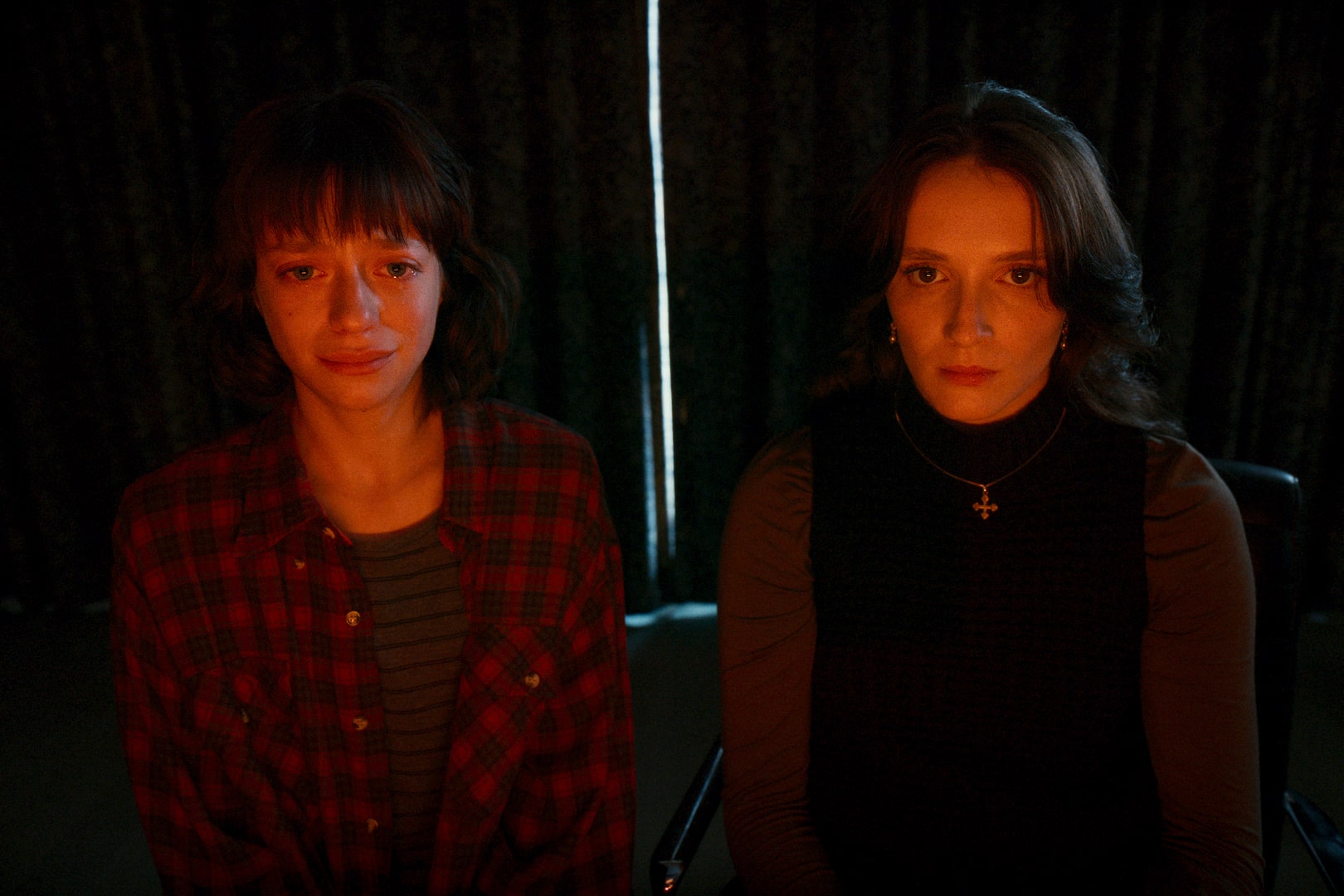
Three years on from his excellent Zombi Child, Bertrand Bonello returns with his latest feature, Coma, which screens today and tomorrow as part of the London Film Festival.  The film serves as the final instalment of the director's loose trilogy on youth which began with 2016's Nocturama, and it's a strangely moving affair; there's an added poignancy from the fact that it features the late Gaspard Ulliel's last performance.  Compared with its two predecessors, Coma is something of a scaled-down work, which isn't too surprising when you learn that it was made during lockdown.  As with a number of other filmmakers, Bonello has used the constraints imposed by COVID-19 to his advantage, with the necessarily smaller canvas leading the director to some fine creative choices.  Perhaps unsurprisingly, screen technology—which, during lockdown, gave so many of us a much-needed window to the world—is at the centre of Coma, as its bedroom-bound main character looks to connect with others.


That protagonist, impressively played by Bonello's Zombi Child star Louise Labèque, is a nameless teenage girl grappling with one of the early lockdowns enforced by France as COVID spread around the world.  We observe her as she spends her days glued to various screens, in the process catching up with her friends via Zoom calls and taking in various YouTube clips.  Her attention is drawn to one influencer in particular, Patricia Coma (Julia Faure), a rather disconcerting presence whose videos cover a range of topics, although she's frequently seen peddling the Revelator, an electronic toy that will be instantly familiar to everyone who has ever played memory skill game Simon.  The girl is soon in possession of one of these devices, although it's not clear how she obtained it; as the long days allow our protagonist to master the game's lengthy, complex sequences, it appears that the Revelator may have a purpose beyond simply testing short-term memory.    


Among this sea of gadgets, however, there is a refreshingly analogue activity in the form of an ongoing stop-motion melodrama performed by the girl's Barbie dolls (voiced by the likes of Bonello alumni Ulliel and Louis Garrel), whose story is punctuated by eerie, inappropriate canned laughter that brings to mind the anthropomorphic rabbits of David Lynch's Inland Empire.  Yet Coma's strangest passages emerge when the girl goes to sleep, as during the night she is transported to an unsettling twilight world, one largely populated by the dead.  Patricia Coma, who as far as we know is still alive, can also be spotted in this realm; moreover, the YouTuber tells the girl that this is the only location where it's possible to exercise free will.  With this in mind, it really does appear that, as Brian Molko of Placebo once sang, "the only place you're truly free is cosy in your dreams".


Clocking in at just 80 minutes, Coma is as modest temporally as it is spatially.  It is, however, a deceptively slight affair in which Bonello manages to cover a great deal of ground, with subjects ranging from climate change and COVID to the roles both technology and Gen Z will play in the planet's future.  With its multiple ways of facilitating its protagonist's escape from the restrictions brought about by the pandemic, Bonello's endearingly hopeful film skilfully captures the essence of what it was like to be a zoomer in lockdown.  For many of us during that time, the world got so much smaller—yet it can be argued that teenagers were among the most tech-savvy, and as such were well-equipped to rapidly identify ways in which to get a sense of the world beyond the proverbial four walls.  Sincerely presented as a letter to Bonello's teenaged daughter, Coma is a haunting, memorable conclusion to a fine trilogy.

Darren Arnold

Images: BFI

Wednesday, 17 March 2021

Enfant Terrible (Oskar Roehler, 2020)

In the second sequel to Despicable Me—a title which, had it not already been taken, would have proved an apt choice for Oskar Roehler's latest film—Trey Parker's villainous Balthazar Bratt frequently wheels out his catchphrase: "I've been a bad boy".  Were the subject of Enfant Terrible—infamous Bavarian filmmaker Rainer Werner Fassbinder—to borrow Bratt's catchphrase, it would stand as a monumental understatement, much like the title of Roehler's biopic, which doesn't come remotely close to crystallising the wide-ranging cruelty meted out by the unhinged director.  While Roehler's film allows us to marvel at Fassbinder's prolific career—by the time of his death, at age 37, he'd completed more than 40 films—it is by no means a hagiography, and the consequences of Fass' destructive behaviour are laid bare for all to see.  That said, there are times when Fassbinder comes across as an almost sympathetic character, one who appears pathologically incapable of accepting the love and attention he continually craves.


Much of Enfant Terrible's appeal lies in its towering central performance; as Fassbinder, Oliver Masucci is little short of sensational, and the actor deftly avoids lapsing into caricature.  For the majority of the hefty running time, Masucci's Fassbinder is rarely seen without a cigarette in his mouth and/or a drink in his hand, and as the film progresses we see the director's drug habit escalate to the extent where it eventually, predictably causes his premature death; the copious substance abuse depicted here goes a long way towards explaining both Fassbinder's productivity and his frequently appalling treatment of those close to him.  As Enfant Terrible goes about the business of detailing the production of several of its subject's films, it soon becomes apparent that Fassbinder saw no meaningful line of demarcation between his life and work, and whoever was in favour at any given time was likely to be playing the lead both on and off screen.  Mind you, there was really only one lead in Fassbinder's life; just in case we've failed to identify who this is, one particularly loyal subject—who's been pushed far beyond his limits—finally sends a home truth in Fass' direction, yelling, "only your feelings count".  If only Fassbinder cared what others thought.  


Enfant Terrible is populated by many recognisable characters. including Andy Warhol, Jack Palance, Ulli Lommel, and of course the core group who became famous on the basis of their work with Fassbinder; some of these have retained their actual names, while others—such as Hanna Schygulla—are represented by thinly-veiled proxies.  Few, if any, of Fassbinder's entourage are safe from his vindictive, bullying nature, and we witness the director masterminding numerous cruel incidents: a vegetarian is coerced into eating meat; an actor is forced to do a stuntman's job as he's dragged along the ground by a motorcycle; and a pair of young children are deliberately locked out of an apartment as the rain lashes down.  Fassbinder's unpleasantness, much like the devotion of his numerous hangers-on, knows few bounds, and it seems that the bulk of his circle are prepared to overlook the tyrannical behaviour of someone who seems indifferent to the damage he inflicts on others; indeed, more than one of those close to Fassbinder winds up dead before he does.

While Enfant Terrible is perhaps ten minutes too long, it is an absorbing, hugely entertaining film that's anchored by a terrific leading performance.  While Masucci—an actor previously best known for Netflix series Dark—is around fifteen years older than Fassbinder was when he died, he's so compelling and convincing in the part that this proves to be no obstacle; this is all the more remarkable when you consider that he plays Fassbinder from the age of 22 until his death (admittedly, it probably helps that the drug-ravaged Fass could have passed for someone much older as his life neared its conclusion).   The film is stylised to the extent that it's often hard to know whether we're looking at a set of a Fassbinder film or just a scene of the director at home with his friends, which again highlights the lack of a boundary between the subject's life and work.  At times, Enfant Terrible's look and feel recall those of another biopic, Bertrand Bonello's Saint Laurent, and Roehler's film is a similarly handsome piece of work, one that will hopefully prompt those new to Fassbinder to dive into his extensive filmography.  Enfant Terrible screens as part of BFI Flare from today until March 28; should geo-restrictions prevent you from viewing the film at the festival, there is another option available in the form of the German Blu-ray, which was released just a few days ago. 

Darren Arnold

Images: BFI

Monday, 23 December 2019

The 20 Best Films of 2019: An Alphabetical List


There wasn't much time available in which to put this together, and ideally I would have liked to have scribbled a little bit about each entry.  Instead, if I've written about a film on either this site or Letterboxd, then the film's title will be a clickable link which will take you to the relevant review.  I have a terrible feeling I've forgotten at least one really important film in this list, and I'm also slightly annoyed that I couldn't squeeze in Robert Rodriguez's Alita: Battle Angel, which nonetheless deserves a mention as the best of the rest.  So, in no order other than alphabetical, here are my picks of 2019:

La Belle Époque (Nicolas Bedos)

By the Grace of God (François Ozon)

Capernaum (Nadine Labaki)

Doctor Sleep (Mike Flanagan)

For Sama (Waad Al-Kateab, Edward Watts)

Ghost Town Anthology (Denis Côté)


The Irishman (Martin Scorsese)

It Must Be Heaven (Elia Suleiman)

Jeanne (Bruno Dumont)

Joker (Todd Phillips)

The Last Black Man in San Francisco (Joe Talbot)

Marriage Story (Noah Baumbach)

Monos (Alejandro Landes)


On a Magical Night (Christophe Honoré)

Once Upon a Time in Hollywood (Quentin Tarantino)

Portrait of a Lady on Fire (Céline Sciamma)

Rolling Thunder Revue: A Bob Dylan Story (Martin Scorsese)

Star Wars: Episode IX - The Rise of Skywalker (J. J. Abrams)

La vérité si je mens! Les débuts (Michel Munz, Gérard Bitton)

Zombi Child (Bertrand Bonello)

That's it for this year!  See you in 2020 - have a great Christmas! 🎄

DA

Images: image.net